


The Complete Guide to Choosing the Right Laser Grader for Precision Site Levelling
Introduction - What Is a Laser Grader and Why It Matters
In New Zealand and Australia's civil construction and development sector, the difference between profit and loss can often come down to millimetres. A razor-thin margin of error is where our graders come in—turning earthmoving from art into exact science.
By pairing laser guidance with automatic blade control, they take the guesswork out of finishing work, delivering consistent levels for slabs, pavements, and drainage while reducing rework and labour hours. Many modern graders, including Neilo’s, are purpose-built to integrate with these systems, giving contractors dependable performance in Australasian conditions.
How Laser Grading Works
Understanding how a laser-controlled grader works helps contractors assess whether the technology justifies the investment on their specific projects. The magic lies in a brilliantly simple automated loop:
- Laser Transmitter (Reference Plane): A rotating laser on a tripod sets the reference level for the entire site.
- Laser Receivers on Mast(s): Detect the beam and track the blade in real time.
- Control Box and Hydraulic Valve: Signals go to the in-cab control box, which compares blade height to the target plane and commands the hydraulics.
- Automatic Blade Adjustment: Blade moves automatically to stay on level.
The operator steers; the system handles precision within ±2–3 mm, turning a complex manual task into a repeatable process.

Standard Graders vs Laser-Controlled Graders
What's the real-world difference? It's the choice between manual effort and automated precision.
- Manual Hydraulic Grading: Relies on operator skill and visual checks. Labour-intensive, slower, and less consistent over large or precise sites.
-
Laser-Controlled Grading: Automation delivers consistent results, faster timelines, and minimal rework. Essential for final trim and slab prep.
Types of Laser Graders Used in Civil Construction
-
Tractor-Based Laser Graders
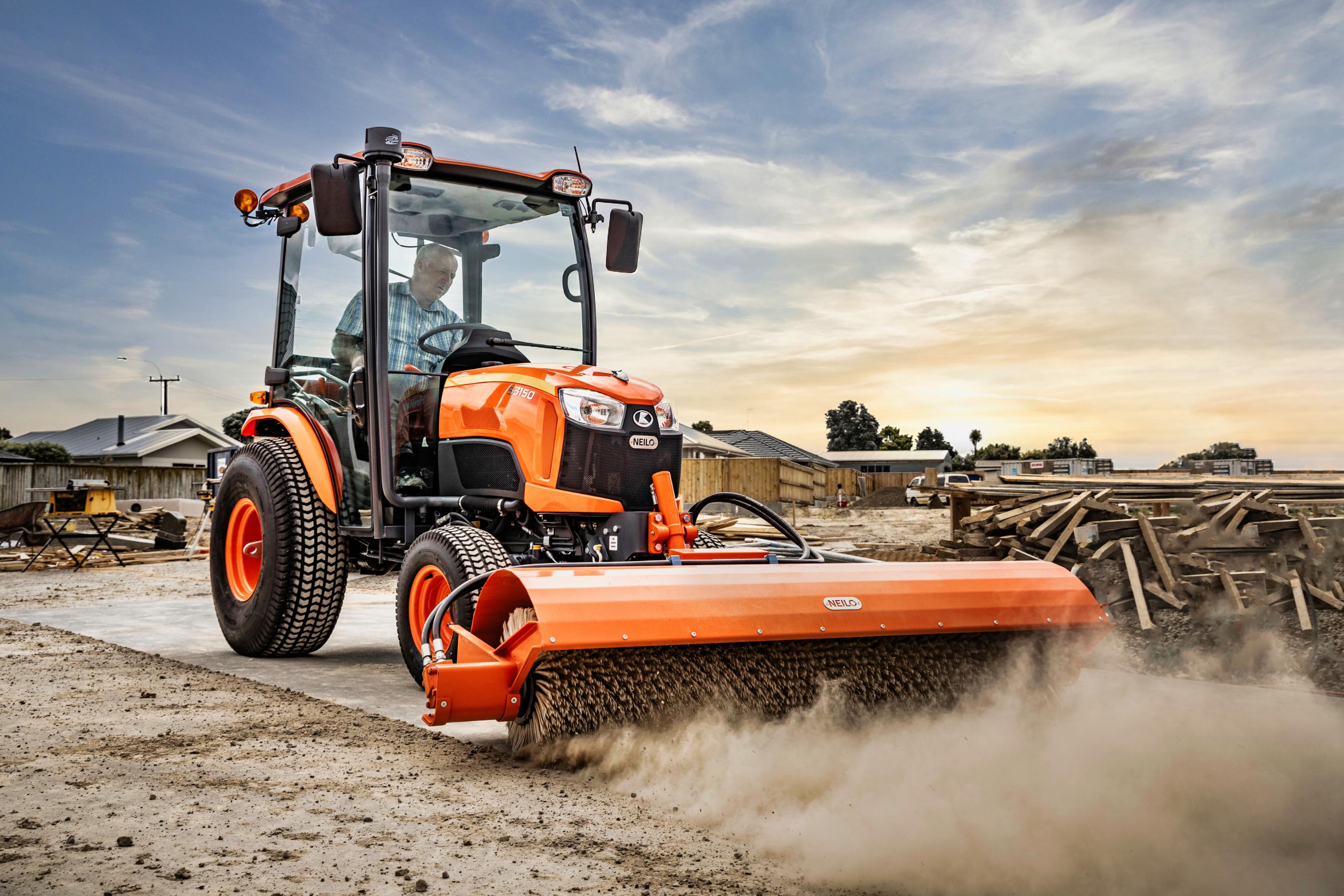
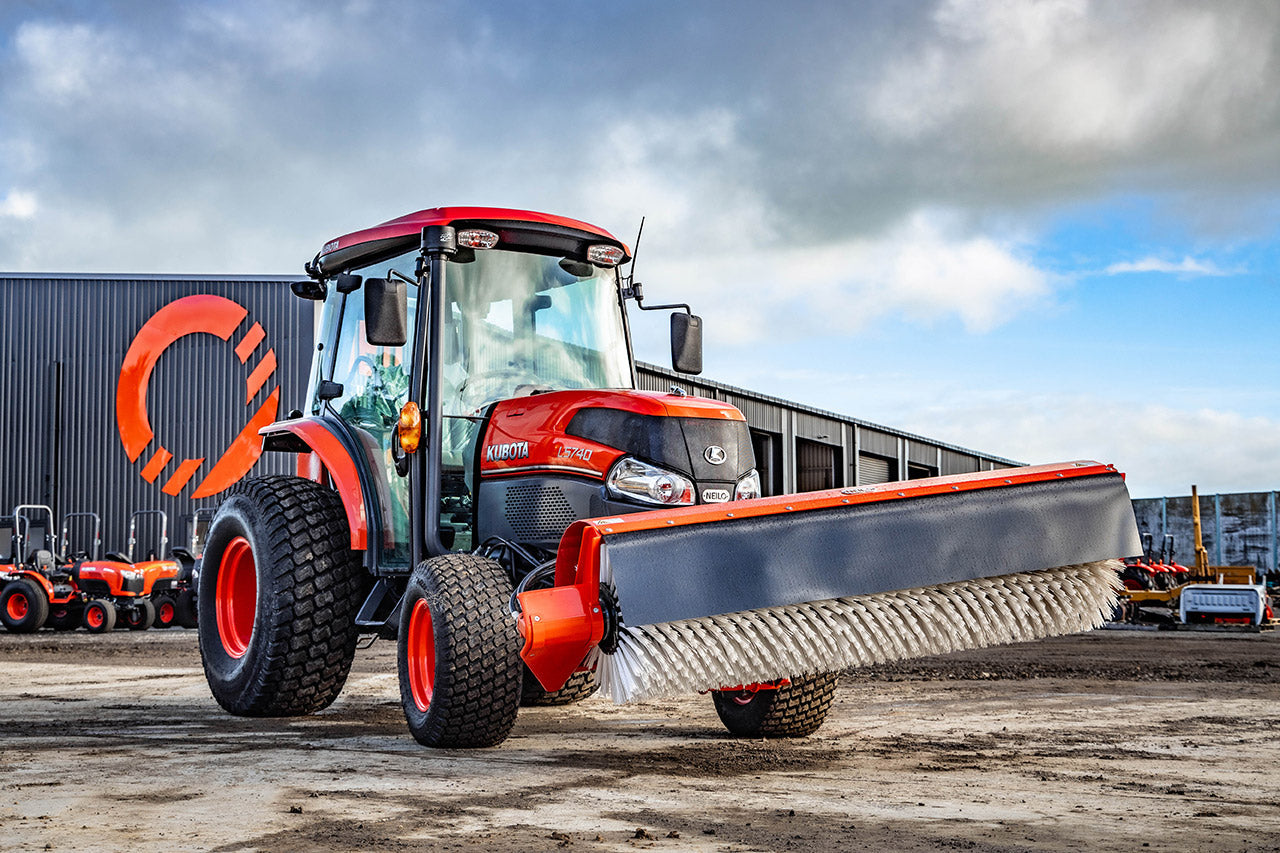
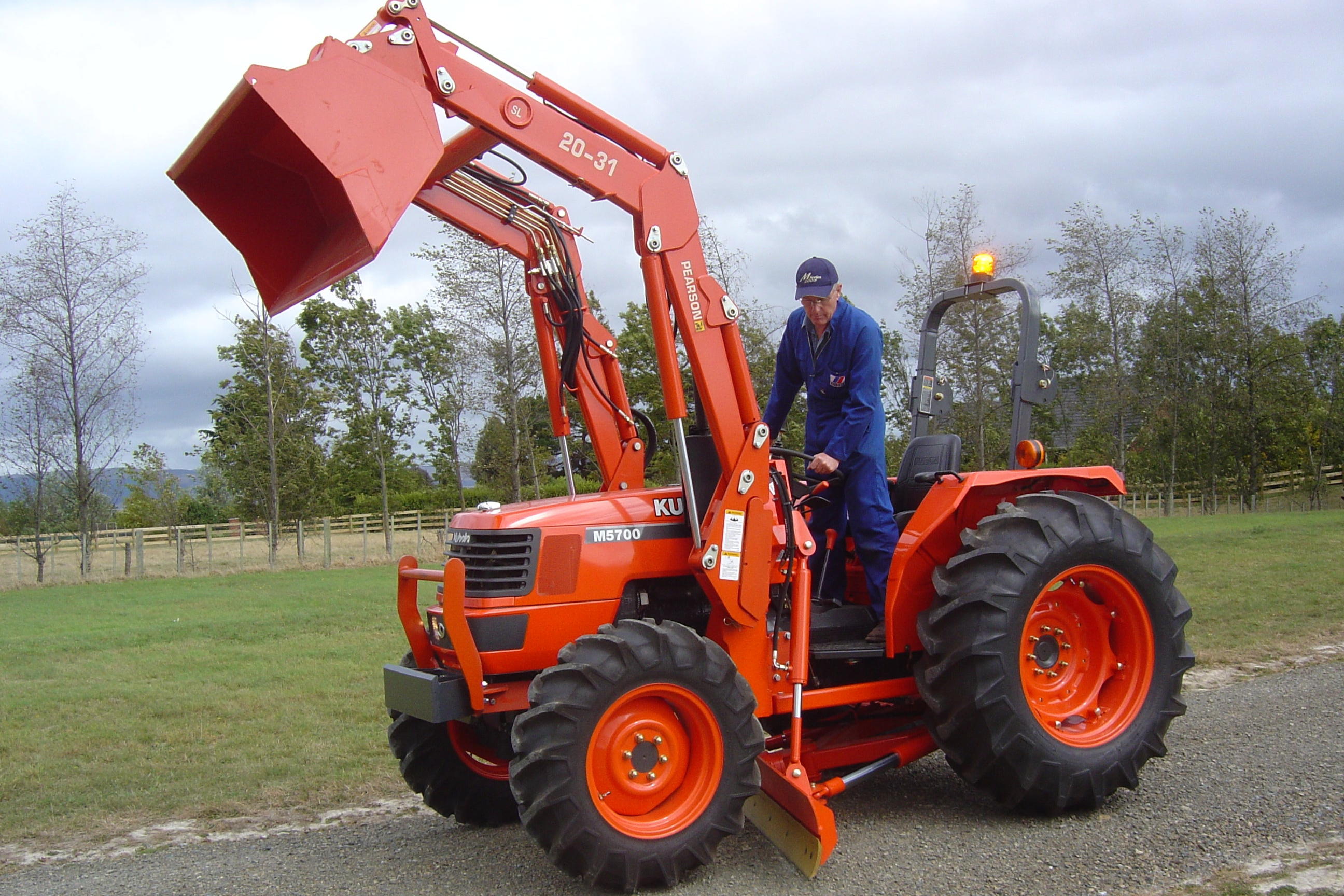
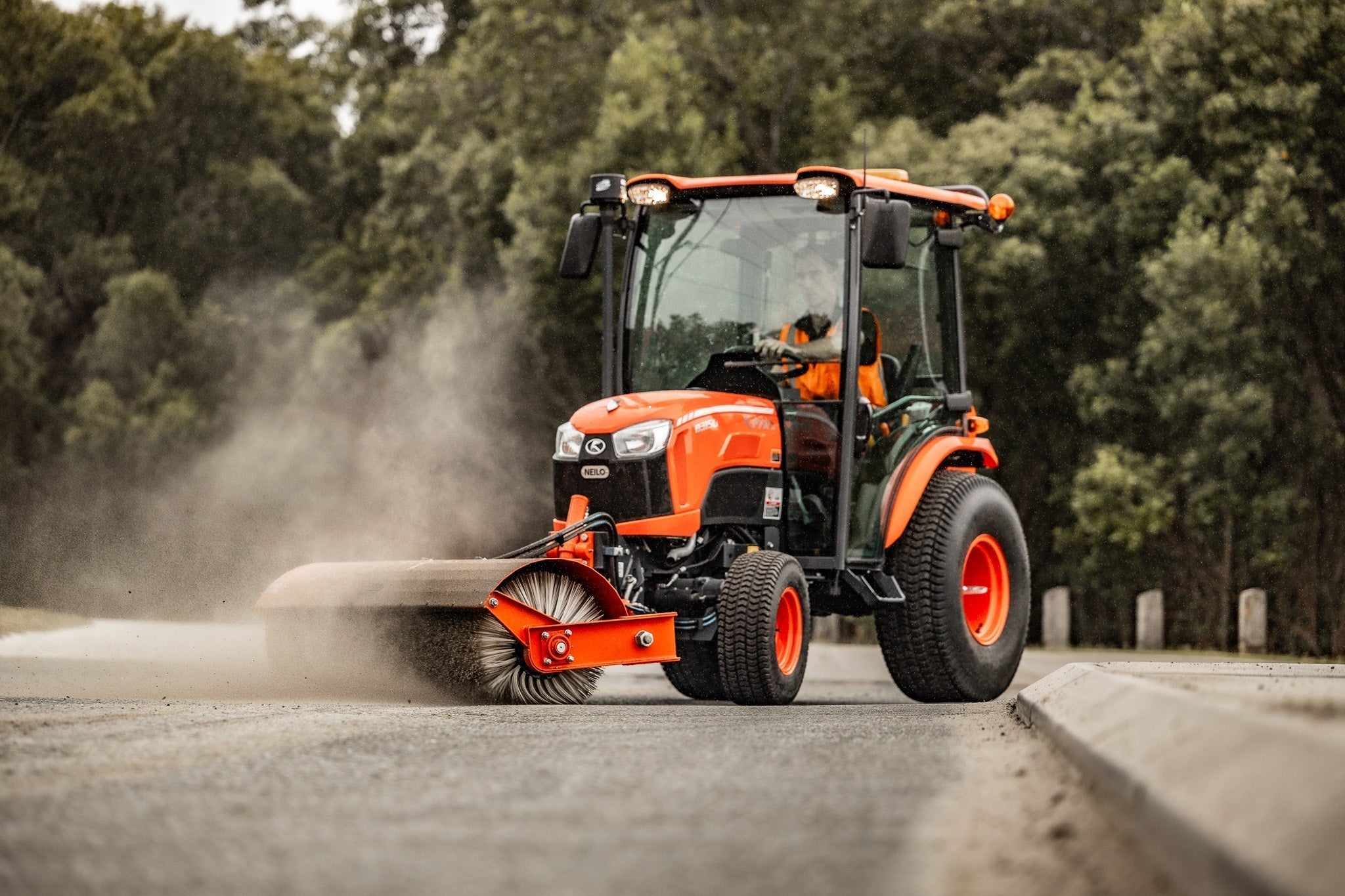
For robust precision, tractor laser grader systems are the benchmark. Their stability, powerful hydraulics, and clear visibility provide the ideal platform for laser work. Neilo specialises here, delivering purpose-built graders that integrate with 2D laser or GPS grade control systems.
-
Laser Graders for Final Trim & Slab Prep
A grader with a laser system is indispensable for critical finish work: ensuring flat warehouse floors, correctly sloped car parks and subdivisions, and perfectly level concrete sub-bases.
-
Laser Grading vs GPS / 3D Grading
It's helpful to know the landscape:
-
- Laser Grading: Ideal for projects with flat planes, constant slopes, and dual-slope configurations (like slabs, drains, roads, and cross-fall pavements). It offers exceptional vertical accuracy.
- GPS/3D Grading: Best for complex, contoured terrain (like sculpted earthworks or golf courses), using satellite positioning.
For most projects, laser grading for civil construction delivers the ideal balance of accuracy and efficiency.

Choosing the Right Laser Grader for Your Project
- Accuracy Requirements: Your need for precision dictates your choice. A laser grader used for concrete slab prep demands higher accuracy than one for rough grading.
- Project Size & Material: Bigger sites need wider blades; tough material demands robust frames and hydraulics.
- Terrain & Conditions: NZ/Australian sites are tough. Durable graders like Neilo’s minimise downtime.
- Compatibility: Ensure proper mounts, hydraulics, and wiring for smooth laser integration.
Key Features to Evaluate in a Laser Grader
-
Blade Design & Adjustability
A robust, reversible mouldboard is essential. Seek fine, responsive adjustments to tilt, angle, and height for a perfect finish. -
Laser System Compatibility
True laser controlled grader compatibility means stable mast mounts, protected wiring, and hydraulic valves that communicate seamlessly with the control box.
-
Hydraulics & Control Precision
Proportional control hydraulics allow smooth, immediate blade movement, keeping the cutting edge precisely on the laser plane without lag.
-
Durability & Build
Heavy-duty fabrication, high-grade steel, and strategic reinforcement define long-term value and reliability under daily site conditions, a principle central to Neilo's manufacturing. -
Maintenance, Wear Parts & Ownership Cost
Easy access to service points and available wear parts reduce downtime and keep ownership costs predictable.

Benefits of Investing in a Laser Grader
The business case for a laser grading machine is compelling:
- Speed & Accuracy: Complete work faster and to a higher standard.
- Reduced Costs: Cut labour hours and eliminate expensive rework.
- Superior Outcomes: Ensure optimal drainage and surface integrity.
- Enhanced Reputation: Deliver consistent quality to win more business.
- Increased Profitability: All factors above improve your bottom line.
Neilo isn’t just about machines; we’re your long-term reliable grading partner, making every grading job precise and hassle-free.
Setting Up for Success: Calibration and Daily Checks
Laser grading precision depends on proper setup. Three critical steps ensure accuracy:
-
Correct Laser Setup: Position the transmitter with a clear line of sight across the work area.
-
Daily Calibration: Check and adjust the system each morning to maintain around 2–3 mm accuracy.
-
Mast Alignment: Verify receiver masts are plumb and secure to prevent drift during operation.
Skipping these steps compromises results and wastes time on rework. Neilo's team provides guidance on setup protocols that match your grade control system.
Frequently Asked Questions
What accuracy can a laser grader achieve?
You can reliably expect ±2–3 mm precision, sufficient for demanding tasks like slab prep.
Do I need a laser grader for concrete preparation?
For commercial slabs or jobs with tight flatness specs, yes. It ensures a top-quality sub-base, preventing costly concrete issues.
Can laser grading reduce labour costs?
Absolutely. It automates the precise work, freeing your crew and cutting manual correction time.
Can Neilo graders be fitted with laser systems?
Yes. Our graders integrate with major laser and GPS systems. Adding the Grade Control Interface at purchase simplifies setup and cuts future integration costs.
Conclusion

Looking for a Laser Grader for Sale? Why Neilo Is a Smart Choice.
Choosing a laser grader for sale is about more than the machine. It's about finding a solution that fits your site conditions. Neilo delivers laser-compatible grading solutions built for local conditions, backed by proven integration with leading laser and GPS systems, heavy-duty construction, and local support that keeps you moving.
Grade Control Integration Support
Setting up a grader with a laser system involves technical details: interface compatibility, hydraulic valve specs, mast mounting, and wiring. Neilo's team knows grade control systems inside out. We'll walk you through how our graders integrate with your preferred system, answer your technical questions, and help you avoid costly setup mistakes.
Ready to level up?
Explore our laser-ready graders or contact us for expert advice on grade control integration for your next project.
Contact Us

Leave a comment
This site is protected by hCaptcha and the hCaptcha Privacy Policy and Terms of Service apply.